

How to Choose the Right Babywearing Position for Your Needs

Updated: Aug 13
This guide is for you if...
✔ You're considering experimenting with how your baby sits in the carrier
✔ You don't know where to start
✔ You're curious about different positions and when they might be best
✔ You're already browsing slings/carriers online that carry your baby in various positions
New to Little One Snug?
If you're expecting a baby or already navigating life with one, you're in the right place. I'm Emma, a qualified babywearing consultant based in Hastings (UK), helping families across East Sussex choose, fit, and use baby carriers safely and confidently.
✓ Book a personalised 1:1 consultation,
✓ Hire carriers before buying
✓ Get expert support for any sling or carrier
Further afield? I may be able to offer Online Support


Every baby is different, and sometimes the advice online can leave you wondering if you’re doing it “properly” at all.
Babywearing is meant to support you, not stress you out. And the beauty of it is that different positions can change as your baby grows, your confidence builds, or simply as your day unfolds.
Position types summary:
Front inward-facing, front facing-out, hip carry, and back carry. Find out how to choose the one that works best for your body, your baby, and the moment.
Before you choose: start with the basics
No matter which position you /your baby loves. Safety and comfort are key. Baby should be upright, and tummy to tummy (generally speaking).
If you’re new to babywearing or you’d like a refresher, you might enjoy my post on Sling Safety This quick checklist can boost your confidence straight away :)
1. Front inward-facing carry
The snuggly one
Best for: newborns and even bigger babies, great for supporting naps, bonding, comfort, and noticing feeding cues.
Pretty much all baby carriers will offer this positioning, some will be more ergonomic than others.
My carrier collection lists each position the carriers in my library offer.
Most supportive for: The first year (longer even!)
This is the position most parents start with, it supports baby's natural physiology, keeps them in a lovely easy-to-monitor position, it’s also perfect while you're still finding your rhythm.
You'll love this carrying position if your day includes:
Contact naps
School runs
Getting chores done with two hands free
A baby needing lots of comfort or regulation
If you’re still learning how to get a good fit, why not read my post on common babywearing mistakes and how to correct them. Or (most recommended) book in for a support session with a local sling library or consultant, to really understand and troubleshoot with someone who gets it!
2. Front facing-out carry
The “I want to see everything!” position
This positioning is best done in short curious bursts - perhaps a trip to the aquarium or something similar!
My gripes with this positioning - read my post Facing Out: Top Tips for Safe and Comfortable Babywearing it does come with more safety precautions, and a lot of people think their baby needs to be in this position (they don't, and this position is perfectly fine to skip!). This position will also be least comfy for your body!
Just having baby's arms positioned over the top of the panel will give them lots more visibility, or using a hip carry can be a nice alternative seeing as baby can sleep in this position safely too.
Not all carriers offer this positioning. Simply narrowing the base is not a hack - because of how the panel ends up tightening around baby can be quite uncomfy on the legs. My favourite facing out models (Ergo Omni / now the classic, Dream / Deluxe, Tula Explore, Baby Bjorn Haromy, Beco Gemini as more budget. While some lighterweight carriers do offer such positioning too like the Izmi breeze, Mamaruga Zensling, or Kahubaby - I do think you'll get a much nicer hip carry out of them).
My carrier collection lists each position the carriers in my library offer.
Best for: curious babies with strong head + trunk control (usually once sitting unaided 4-6m+) Baby's who are very alert. If baby is looking drowsy turn them back in to avoid that chin drooping onto chest and to keep those airways nice and clear.
Most supportive for: short periods of time when baby wants more visual stimulation. Facing-out can be fun — new colours, new faces, new trees blowing in the wind. But it’s also a position that baby needs to be developmentally ready for.
Your baby might be ready to face out if they can:
Sit up
If they are tall enough to fully clear the panel of your carrier - their chin shouldn't be resting on, or positioned below the headrest.
Once baby is heavier, this position really won't be great for your spine so come the year mark, the recommendation is moving away from this positioning - did you know no toddler carriers have such positioning for this reason?!
Tip: Use facing-out for engagement, not for long periods of wearing – your back will thank you too!
Want to know that your baby is well positioned for facing-out? If you’re in Hastings or East Sussex, you can book a sling consultation with Little One Snug. We can check your fit, try different carriers and find something that works for your family.
3. Hip carry
The social butterfly position
Best for: babies who want to interact while staying close (Once you are moving baby to the side of your body and they are trying to sit up 4-6m a hip carry is perfect. Essentially, you don't want to over-extend legs too soon.
Any carrier that can be worn in X strap formation (rather than H) can be used to hip carry. Pretty much all tying carriers can be worn in this way :)
My carrier collection lists each position the carriers in my library offer.
Most supportive for: bigger babies and toddlers, busy days, or older babies wanting a side view.
Hip carries are often overlooked, yet they're the perfect middle ground between inward-facing snuggly closeness and outward-facing adventure. They allow your little one to see the world from a new angle — without overstimulation — and they keep your centre of gravity balanced.
It's worth noting due to how weight is distributed particularly if you suffer with back pain that this position may not be one you can overly enjoy.
A hip carry tends to shine:
On days when baby wants to “look around and be held”
For quick ups and downs
For breastfeeding on the go (with practice!)
For toddlers who want to chat to you
Why not read this post Hip Carriers – How to Hip Carry…
4. Back carry
The practical powerhouse
Best for: older babies, toddlers, longer walks, chores, you can even back carry a newborn (if confident / experienced, and are using the right carrier type - meh dais, wovens)
Not all carriers are suitable for back carrying - do check the instructions.
My carrier collection lists each position the carriers in my library offer.
Moving onto a toddler sling? Why not hire to try before you buy?
Want to learn how to back carry safely solo – booking in for a consultation (look at the types I offer) can be such a great way to explore this :)
Most supportive for: comfort, stamina, independence
Once your baby is old enough (6m with a buckle carrier – usually what most people are used to) back carrying can open up a whole new world of freedom. Whether you're tackling housework, going on longer outdoor adventures, or simply giving your arms a break — this position spreads weight beautifully across your back and hips.
Parents often shift to back carrying when:
Baby is feeling too heavy, too tall on the front
They may be less keen on snuggling inwards
You need to cook or safely use your hands
You're wearing for longer stretches
Your toddler wants “up!”
Choosing based on your needs (A Quick Guide)
Here’s a simple way to match your daily needs to a carry:
You need comfort + calm with a younger baby → front inward-facing
You need stimulation + short playful moments with a baby that has great torso / head control → facing-out
You need to multitask with a social baby (again, that has great torso / head control) → hip carry
You need stamina + practical freedom → back carry
Remember: your needs matter too. If a carrying position doesn’t feel good for your body, it’s absolutely okay to adjust, switch, or explore a different carrier altogether.
Real life babywearing: it changes as you do
Your babywearing journey won't look the same as someone else’s. It might not even look the same from one month to the next,and that’s completely normal. Think of your carrier as a tool that grows with you. Here's How Babywearing Has Helped Me on My Parenting Journey.
Want personalised support?
If you're reading this and thinking, “I’d love someone to check I’m doing it right,” or “I’m not sure which position suits my baby best,” you’re not alone — and that’s exactly what I help families with every week.
Learn about what to expect in a 1:1 Babywearing Consultation
Why not hire a carrier – and find out why I really recommend trying before buying!
Happy Carrying,
Emma
X
Every baby, every parent, and carrier is different!
Articles like this can answer general questions, but they can't check your fit / comfort, adjust your sling or tell you whether your baby is positioned comfortably and safely.
That's exactly what I do during support sessions.
I'm Emma, the babywearing consultant behind Little One Snug. I offer relaxed, personalised sling consultations, carrier hire and troubleshooting sessions for families across Hastings and East Sussex, helping you carry your baby safely and confidently from newborn through to preschool. Whether you're choosing your first sling, struggling with your current carrier or simply want reassurance that everything feels right, I'm here to help.
Local and ready to get started?
Ok, but I'm not Local, and I'd benefit from more Support!
If you're outside East Sussex why not Read my Other Blog Posts?
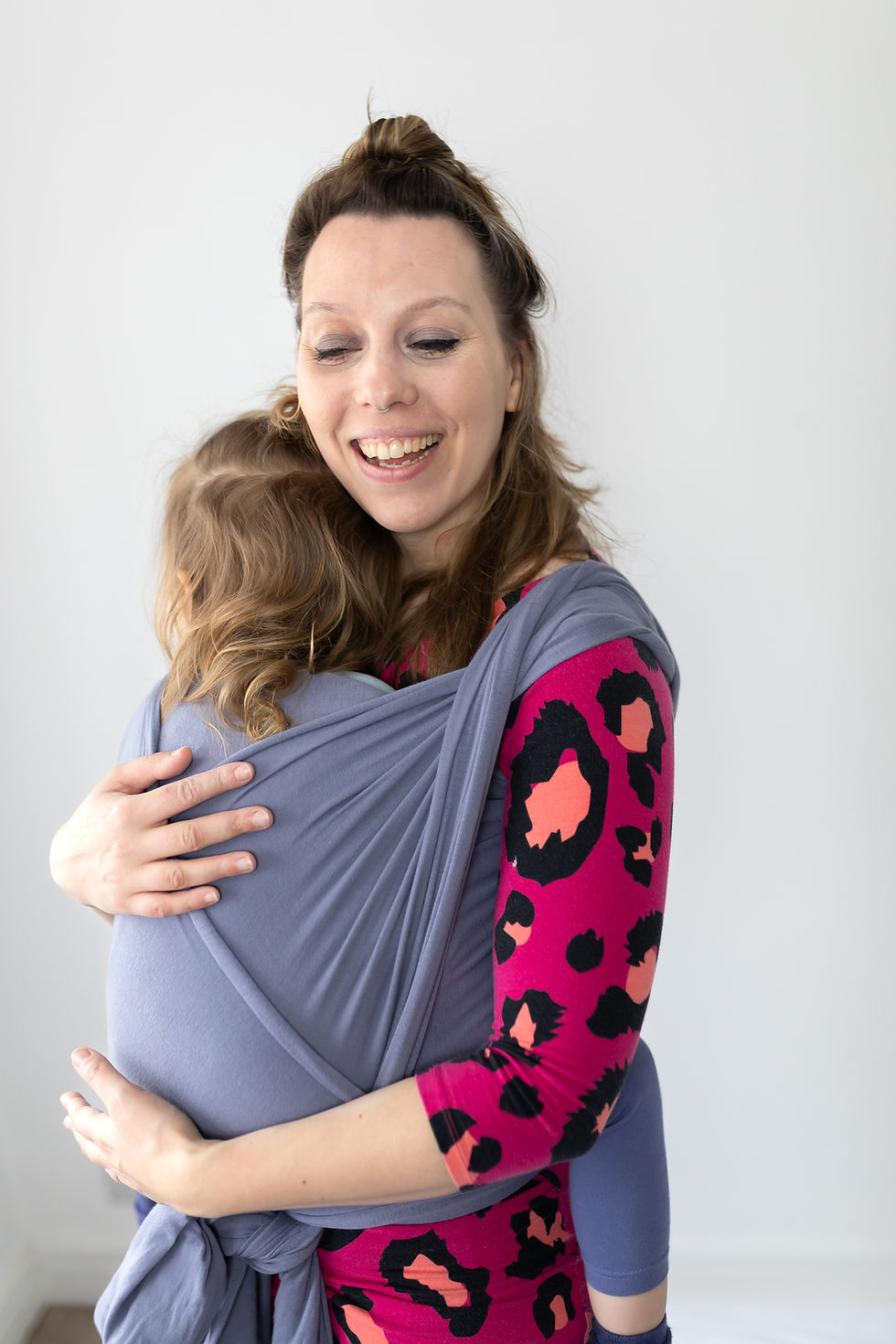
About the Author:
Emma is the founder of Little One Snug, a babywearing consultancy and sling library based in Hastings, East Sussex. Supporting 240 local families (and counting) since 2024 with all their babywearing needs.


