

Baby Carrier Weight Limits Explained: What Parents Need to Know

Updated: Aug 13
New to Little One Snug?
If you're expecting a baby or already navigating life with one, you're in the right place. I'm Emma, a qualified babywearing consultant based in Hastings (UK), helping families across East Sussex choose, fit, and use baby carriers safely and confidently.
✓ Book a personalised 1:1 consultation,
✓ Hire carriers before buying
✓ Get expert support for any sling or carrierFurther afield? I may be able to offer Online Support

This guide is for you if...
✔ You're new, or even more experienced with babywearing
✔ You're confused by weight limits
✔ You're not sure why your newborn-marketed sling doesn't fit yet
✔ You're not sure why the sling feels really heavy already
✔ You want to learn more about your carrier, or one you've seen
When choosing a baby carrier, one of the first things many parents look at is the weight limit. You'll often see numbers like: "Suitable from 3.5kg to 20kg" or "Suitable up to toddlerhood." But what do those numbers actually mean? Does reaching a certain weight mean your baby suddenly can't use the carrier anymore? Does a higher weight limit mean a carrier is automatically better? The answer is a little more complicated.

What does a baby carrier weight limit mean?
A carrier's weight limit is the range that the manufacturer has tested and approved that carrier for. It tells you the minimum and maximum weight range where the carrier is designed to be used safely according to the manufacturer's instructions.
However, weight is only one part of the bigger picture - and these references in my opinion really should be taken with a pinch of salt...
Bigger doesn't always mean "too big"
Babies don't all grow in the same way.
Two babies who weigh the same amount may have completely different proportions, body shapes and developmental abilities.
A carrier that fits one baby beautifully may not feel quite right for another.
This is one reason why looking only at weight can sometimes be misleading.
Comfort matters too
A carrier can technically still be within its weight range but no longer feel comfortable for you. Think of a lift at max capacity, or trying to still squeeze into a pair of jeans!
As your baby grows, you may notice:
Your shoulders or back feel different.
Your baby sits differently in the carrier.
You need to adjust the fit more often.
Your current carrier no longer suits your everyday activities.
Does a higher weight limit mean a better carrier?
Not necessarily.
A carrier with a larger weight range isn't automatically the best option.
The most suitable carrier depends on:
Your baby's age and stage.
Your body.
How often you carry.
What activities you do.
What feels comfortable.
A carrier designed for newborns may feel completely different from one designed for toddlers, even if both have similar weight limits.
So how does testing actually work?
Max weight
When a carrier is tested at the upper end of its weight range, manufacturers are checking whether the carrier can physically withstand that load. This involves testing things like whether the fabric, stitching, buckles and straps remain secure under pressure by using a weight (not a real baby).
Many parents find that their child becomes harder to carry comfortably before they reach the stated maximum weight. This is often because their child has grown taller, their body shape has changed or the carrier no longer distributes weight as well as it once did.
A quick fit check or moving to a carrier designed for the next stage can often make a big difference.
Minimum weight
This is where things become more complicated.
Unlike maximum weight limits, there isn't a comparable minimum size testing requirement across all carriers. It is at the manufacturers discretion whether to label as newborn suitable, and from a marketing perspective this is a big tick - newborn items sell!
The newborn label doesn't necessarily mean they will fit every newborn safely from day one. Remember Newborns vary hugely in size, proportions and development. A carrier that can physically hold a small baby may not necessarily provide the right level of adjustment and support for that particular baby.
For a newborn, the important questions are:
Can the carrier adjust small enough to support their body?
Does it allow a good position for their size and development?
Can their airway remain clear and protected?
Does it provide appropriate support without excess fabric or space?
Good fit and positioning is key for safety – 👉 Sling Safety: Remember ABC
Some manufacturers are more conservative with their guidance than others. For example, some carriers may recommend waiting until a baby reaches a certain weight or size, while others are designed specifically with smaller babies in mind.
For babies born early or who are smaller than average, additional considerations may be needed beyond weight alone, so seeking personalised support can be especially valuable.
Remember: a carrier's weight range is only one part of the picture. Fit, adjustment, your baby's development and your comfort all matter too.
When should I stop using my carrier?
You should stop using a carrier if:
Your child has reached the maximum stated weight.
The carrier is damaged or worn.
You can no longer achieve a comfortable and supportive fit.
Your child no longer fits within the manufacturer's guidance.
Before reaching those points, regular fit checks can help you continue using your carrier confidently.
Do I need a toddler carrier?
Not necessarily. Many standard carriers can comfortably support children well into toddlerhood, only once your sling is outgrown will you need something else, and depending on the size of your baby that may not be a toddler sling yet!
Why trying and adjusting matters
A common reason parents think they need a new carrier is simply because their current carrier hasn't been adjusted as their baby has grown.
Small changes can make a big difference.
A fit check can help you understand:
Whether your carrier still suits your child.
Whether adjustments are needed.
Whether another style may work better for your next stage.
Final thoughts
Baby carrier weight limits are important—but they are only one part of choosing and using a carrier. The best carrier is not necessarily the one with the biggest weight range.
It's the one that fits your baby, feels comfortable for you and works for your family's everyday life. If you're unsure whether your carrier still fits, or you're wondering what might work next as your baby grows, personalised babywearing support can help you feel confident in your choices.
Happy Carrying,
Emma
X
Every baby, every parent, and carrier is different!
Articles like this can answer general questions, but they can't check your fit / comfort, adjust your sling or tell you whether your baby is positioned comfortably and safely.
That's exactly what I do during support sessions.
I'm Emma, the babywearing consultant behind Little One Snug. I offer relaxed, personalised sling consultations, carrier hire and troubleshooting sessions for families across Hastings and East Sussex, helping you carry your baby safely and confidently from newborn through to preschool. Whether you're choosing your first sling, struggling with your current carrier or simply want reassurance that everything feels right, I'm here to help.
Local and ready to get started?
Ok, but I'm not Local, and I'd benefit from more Support!
If you're outside East Sussex why not Read my Other Blog Posts?
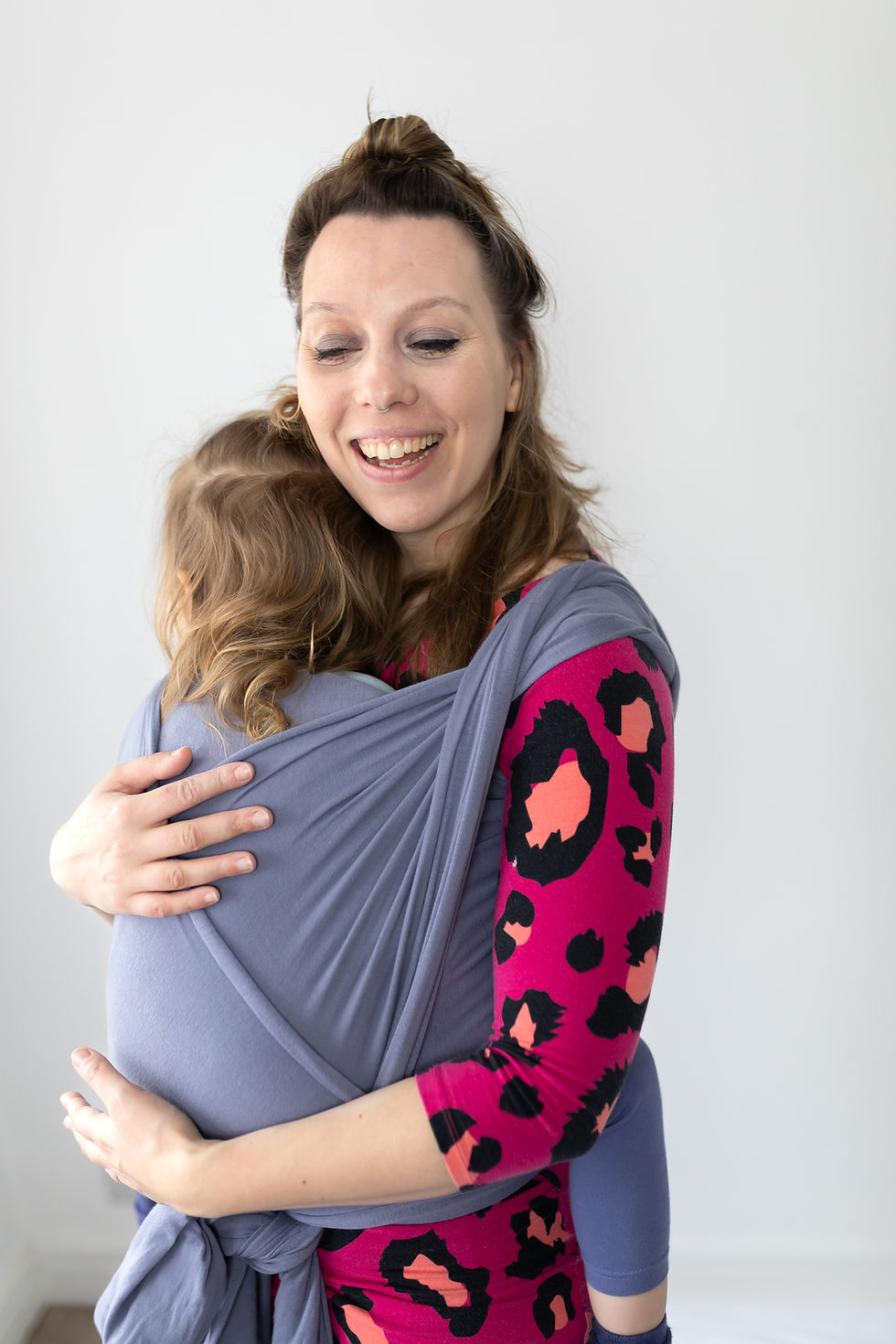
About the Author:
Emma is the founder of Little One Snug, a babywearing consultancy and sling library based in Hastings, East Sussex. Supporting 240 local families (and counting) since 2024 with all their babywearing needs.


